Thursday, January 14, 2010
At the Martha Stewart Show
Wednesday, December 23, 2009
Healthcare

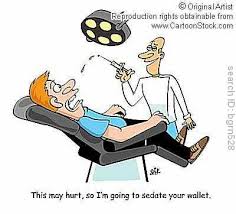
Now being a freelance artist I am now addressing my own need for health insurance. It is an incredible cost and sometimes seems a luxury expense to a healthy young individual. But of course it is not a luxury, as a dancer, when ones' body is the primary tool to the art being created.
As the healthcare reform bill goes before the senate here are a couple quick thoughts from Dance/USA.
Dance/USA Statement on Health Insurance Reform
Dance/USA supports health insurance reform that ensures the existence of accessible and affordable insurance for all individuals, including those self-employed and in non-employer groups, and organizations involved in the creation and presentation of dance in the United States. In addition, Dance/USA supports health care legislation that includes measures that provide incentives to nonprofit employers that are equivalent to those provided to for-profit employers.
Many individuals in the dance field are young and often self-employed. Many dance organizations operate on small budgets and may be unable to offer health insurance benefits to employees. According to research conducted by the National Endowment for the Arts (2003-2005 American Community Survey):
- Professional dancers and choreographers are the youngest group of artists with a median age of 26 and 80.8% under the age of 35.
- Only 25% of professional dancers and choreographers work full-time year-round; 22% are self-employed.
- In 2005, the median income was $20,000 for professional dancers and choreographers.
And, according to data collected by RAND Compare and the Bureau of Labor Statistics’ National Compensation Survey in 2007:
- Households with income of less than $25,000 (in 2007 dollars) are nearly three times as likely to be uninsured as are households with incomes of $75,000 or more.
- By age, the majority of the uninsured are under the age of 35.
- 24% of part-time private-industry workers have access to medical health care benefits.
In addition, according to studies done by Dance/USA between 2001 and 2006, a majority of dance artists hold an average of four part-time jobs, most of which do not carry health insurance. Some of the most common examples of part-time work include serving as a choreographer, performer, dance instructor, part-time dance administrator (often at different organizations) and/or part-time work outside the dance field.
Dance/USA has sought to share information on the health insurance reform proposals with our membership, and we encourage our members to take action in accordance with their own personal beliefs and values.
Tuesday, December 8, 2009
Coming up! DanceNYC mid-year symposium
Monday, October 26, 2009
An article by Liz Lerman
A Proposed Job Swap To Save American Capitalism
By Liz Lerman
Do Wall Street executives deserve big bonuses during hard times? Does increased arts funding have a place in an economic stimulus package? I’ll leave it to others to debate these controversies. Meanwhile I’d like to make a modest proposal to solve some of our economic problems: Let’s do a job swap. We’ll put the corporate executives to work as artists while the artists run Wall Street.
Since their first task will be getting economic markets back on solid footing, I’m convinced that artists have the perfect resumès for their new jobs. Here’s why:
1. Artists work ridiculous hours for no pay. And most of the artists I know will keep working until they get the job done right.
2. Artists do not need fancy offices. In fact, they usually work in the worst part of town … until that part of town becomes fancy because the artists are there. Then they have to move because they haven’t paid themselves enough to afford the new rent.
3. Artists throw everything they earn back into the store – which is why they haven’t paid themselves enough. (I will admit that there was one time I didn’t do this. When I was awarded a MacArthur Fellowship back in 2002, I decided to open my first retirement account. I put the money in “very safe” stock market investments. I would have been better off putting it into my next dance.)
4. Artists do not need financial incentives. Artists do the work they do because they love it. Or because they believe in it. Or because they think it is a social necessity for our communities. Or because they know when people make poems or pictures or dances, our best human spirits emerge.
5. Artists do not expect to get anything if they do a bad job. Except maybe a bad review.
6. No artist gets a bonus because there is never enough money at the end of a project.
7. Artists keep very tight budgets. They know how to spend the same penny over and over (not by cooking the books, but by pinching, recycling, borrowing, bartering and plowing their economy-airline frequent-flyer miles back into the next project.)
8. Artists have a rightful reputation for fresh ideas combined with a capacity for self-evaluation that borders on recrimination.
9. Artists play well with others, having evolved highly efficient collaborative techniques in the service of their visions. But they are also very independent, delivering great things even when they work alone.
Meanwhile, in their new capacities as painters, poets, cellists and choreographers, our Wall Street executives might be experiencing a combination of culture shock therapy and ethical boot camp. Artistic practice may force them to discover what they really believe in, because the combination of introspection, discipline and craft that fuels an artist’s work (oh, and it is work) puts people in a very demanding state of truth. Doing what artists do every day, some might find themselves in overcrowded classrooms, excited to share their practices to help young people discover that they actually can learn. Others might be sparked to help communities solve problems by bridging differences through the unique power of their art forms. Those who have been lucky enough to get funded for their work will likely be staying up nights, filling out multiple forms to prove the exact use of the money they have been granted. All will find their moral compasses tested as they balance the demanding loyalties of pursuing personal vision and creating value for an audience.
The job swap I propose might have a final payoff: With artists in charge of Wall Street, you might even see people donate to the cause because artists know how to inspire others to participate together, to work for something that matters, to build on the intangibles of the human experience, to make a difference.
Imagine that kind of Wall Street.
Choreographer Liz Lerman is founding artistic director of Liz Lerman Dance Exchange in Takoma Park, Md., and a 2002 MacArthur Fellow. Over the next two months her company will be appearing in Ann Arbor, San Francisco, Houston, Bloomington, Burlington, Sapporo, Japan and the rainforest of Guyana.
Original CAN/API publication: March 2009
Saturday, October 10, 2009
Degree Dance Collective
Degree Dance Collective offers biweekly networking events, dance workshops with various teachers and choreographers, as well as group dance seeing events.
Although I don't have a degree in dance, I do see the need for this kind of organization in the New York dance scene. There is so much opportunity here that distilling your path, amidst it all and without distraction, is a constant struggle. Additionally, all the education or performing experience in the world do not prepare one for the challenges of finding a place in a new scene as vast as New York. Kudos to Degree Dance Collective for creating something vibrant, new and effective!
Friday, July 17, 2009
Just Give
How Much to Give
What's the Average?
The average American gives about 3.1% of their income (before taxes) to charity, an increase from previous years but still well below the traditional 10% "tithe" for charity recommended by religious institutions.
Who Gives the Most?
The people that give the most actually make the least. Households earning under $10,000 a year -- far below the poverty line -- gave 5.2% of their income to charity. That's a larger percentage of their money than any other income group.
What's the Bottom line?
The average household donates $1,620 each year. That's just three dollars a day. Learn more.
You Make the Difference:
Did you know that individuals give 75% of all the money that charities receive? If we all give our fair share, no one will go hungry and no child will grow up in poverty. Sound idealistic? Everything depends on how we spend our money.
Give 5!
While 3.1% is the average, there is a movement to give more. Independent Sector, a coalition of nearly 800 corporations, foundations, and private voluntary organizations, is encouraging us to "Give 5" -- donate 5% of our income and volunteer 5 hours of our time each week.
It All Adds Up:
The amount of money and time that we alone can give may seem small but together as part of a national -- even global -- giving movement we are able to make dramatic changes in the quality of life on this small planet.